Local News
U.S. nationwide ground stop could disrupt Canadian flights and connections
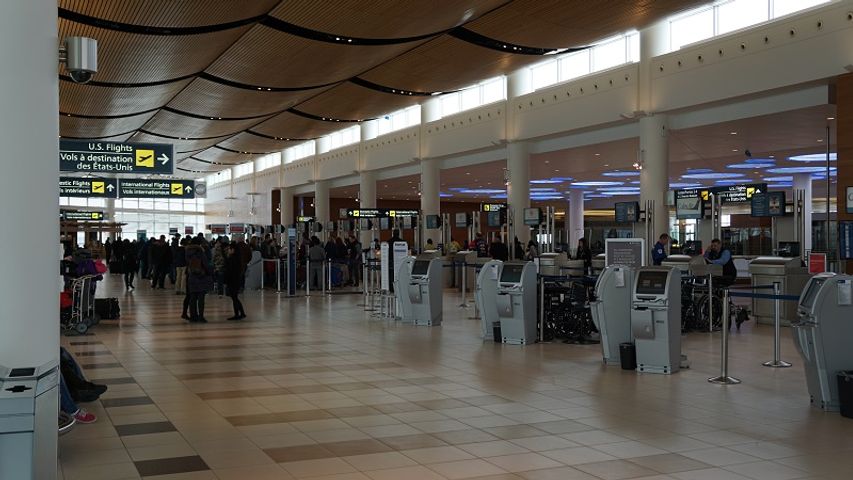
Canadian travellers heading to the United States could face significant delays and cancellations after the Federal Aviation Administration (FAA) ordered a nationwide ground stop Friday afternoon, Nov. 13, following widespread air traffic control communication problems. The extraordinary measure has halted departing flights across the United States, with potential disruptions extending to Canadian airports, airlines and passengers connecting through American cities. While Canadian airports are not subject to the U.S. ground stop, flights travelling between the two countries could be affected as American air traffic restrictions disrupt schedules and aircraft movements. Canadian flights could face delays The FAA issued Air Traffic Control System Command Center Advisory 111 on Friday, citing extraordinary circumstances and safety concerns. The advisory directed all departing aircraft at U.S. airports to remain on the ground until further notice. International flights arriving in the United States are being managed on a case-by-case basis, creating uncertainty for Canadian airlines operating cross-border services. Air Canada, WestJet and American carriers operating flights between Canadian and U.S. destinations could experience disruptions. Major Canadian airports, including Winnipeg, Toronto Pearson, Vancouver, Calgary and Montreal, could see delays on U.S.-bound routes and flights arriving from American cities. You can find the latest Richardson International Airport departures and arrivals, here. Connecting flights could be particularly vulnerable The disruption could create complications for Canadians travelling through major American airport hubs, including Chicago, Denver, Minneapolis and other cities. Passengers whose itineraries involve connecting flights may encounter missed connections, lengthy delays or rescheduling if aircraft cannot depart their U.S. airports. Flights returning to Canada could also be affected because aircraft and crews may be unable to depart American airports as scheduled. Even after the FAA allows departures to resume, airlines may require additional time to reposition aircraft and crews and work through delayed flights. Travellers heading to U.S. destinations, or connecting through American airports for international travel, should monitor their flight status closely. Communications failure behind nationwide shutdown U.S. Transportation Secretary Sean Duffy said communication problems were affecting all 22 regional air traffic control centres responsible for managing aircraft travelling through American airspace. FAA technicians are investigating the issue, but the cause of the failure has not been confirmed. The nationwide ground stop began shortly before 3 p.m. Saskatchewan time. The original advisory listed a period extending into Friday evening, although the order instructed aircraft operators to remain grounded until further notice. Aircraft already in the air were permitted to continue to their destinations. Reuters reported that nearly 7,000 U.S. flights had been delayed or cancelled Friday, citing information from flight-tracking service FlightAware. Rare nationwide aviation disruption The United States last experienced a nationwide departure suspension in January 2023, when a computer system failure disrupted the FAA's pilot notification system. A previous nationwide shutdown occurred following the Sept. 11, 2001, terrorist attacks. Friday's incident has renewed attention on the reliability of the American air traffic control system and ongoing efforts to modernize its infrastructure. The FAA has not confirmed when normal operations will resume. For Canadian travellers, the immediate concern remains the potential for delayed departures, missed connections and interruptions to flights returning from the United States. The situation remains under investigation, with further updates expected from American aviation authorities.






















 Manufacturing, Full-time, Part-time
 Featured












 Fri, Nov 13, 6:00 PM